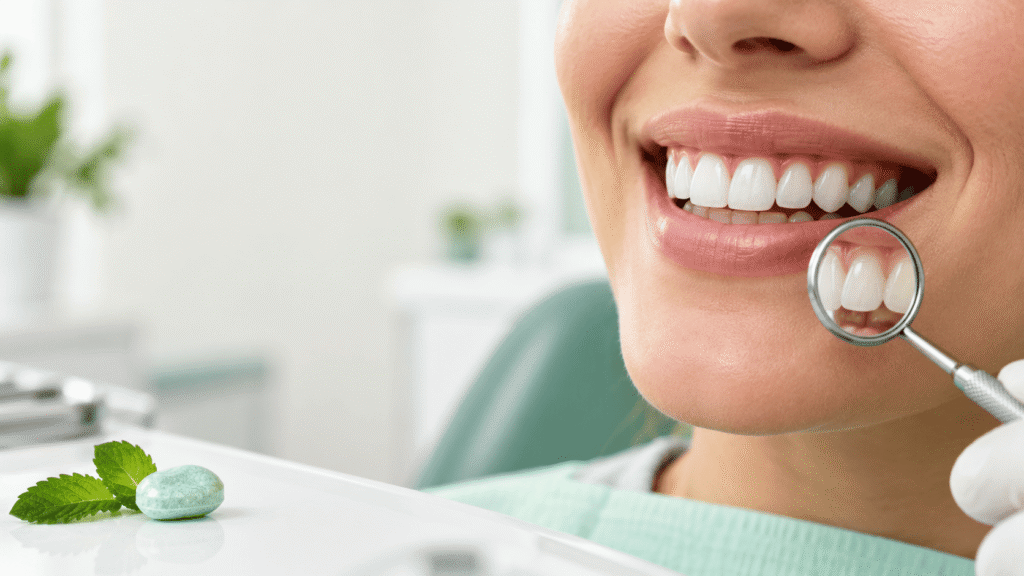
Can Teeth and Gums Regrow Overnight? The Truth About Dental Candy Claims
Online advertisements sometimes claim that a “therapeutic dental candy” can rebuild damaged teeth, regrow gums, eliminate cavities, and relieve tooth pain within seconds.
These promises sound appealing—especially to someone experiencing dental pain or worried about the cost of treatment. Unfortunately, they dramatically misrepresent what current dental science can accomplish.
No candy, lozenge, mouth rinse, powder, or supplement has been shown to regrow a fully damaged adult tooth or restore lost gum tissue overnight. Certain ingredients may support oral health, stimulate saliva, reduce harmful bacteria, or help remineralize the earliest stages of enamel damage. That is very different from rebuilding an established cavity or regenerating lost teeth and gums.
Here is what consumers should understand before purchasing products promoted with miraculous dental claims.
Can adult teeth regrow naturally?
Humans normally develop two sets of teeth: primary teeth and permanent teeth. Once a permanent tooth has erupted and become damaged or lost, the body does not naturally produce a replacement tooth.
A tooth is made of several different tissues:
- Enamel forms the hard external surface.
- Dentin lies beneath the enamel.
- Pulp contains nerves and blood vessels.
- Cementum covers portions of the tooth root.
- The periodontal ligament helps attach the tooth to the surrounding bone.
Mature enamel is particularly difficult to regenerate because it does not contain living cells capable of rebuilding the tissue in the same way that skin or bone can heal.
Researchers are investigating regenerative dentistry, including stem-cell treatments, tissue engineering, enamel-repair materials, and biological tooth-replacement techniques. However, experimental research should not be confused with a commercially available candy capable of growing a new tooth.
Can early tooth decay be reversed?
This is where exaggerated advertisements often exploit a small piece of legitimate science.
The earliest stage of tooth decay can sometimes be stopped or reversed before a physical hole develops. Acids produced by plaque bacteria remove minerals from the enamel. This process is known as demineralization.
Saliva naturally supplies minerals, while fluoride can help return minerals to weakened enamel. This process is called remineralization.
According to the National Institute of Dental and Craniofacial Research, early mineral loss can be reversed, but once the enamel is permanently damaged and a cavity has formed, a dentist must repair it. A cavity does not simply grow closed overnight. National Institute of Dental and Craniofacial Research
Early enamel damage versus an established cavity
The distinction matters:
- Early enamel demineralization: The surface has lost minerals, but a hole may not yet exist. Fluoride, saliva, diet changes, and improved oral hygiene may help.
- Established cavity: The tooth structure has broken down and a hole has developed. It generally requires professional treatment such as a filling.
- Advanced decay: Decay may reach the inner tooth, causing infection or inflammation. Treatment could involve a root canal, crown, or extraction, depending on the damage.
A product claiming that it can cure every stage of decay without an examination is ignoring these important differences.
Can dental candy remineralize teeth?
The term “dental candy” is not a recognized treatment category. It may be marketing language for a lozenge, chewable tablet, probiotic, mint, or dissolving oral-care product.
Some sugar-free products may provide limited oral-health benefits. For example, chewing or sucking a sugar-free product can stimulate saliva. Saliva helps neutralize acids, wash away food particles, and provide minerals used during enamel remineralization.
Products containing evidence-supported active ingredients may also help prevent decay when used correctly. The American Dental Association explains that topical fluoride can strengthen existing teeth, encourage enamel remineralization, and make teeth more resistant to decay. American Dental Association
However, “supports remineralization” does not mean:
- Regrows a missing tooth
- Fills a deep cavity
- Repairs a cracked tooth
- Removes an infection
- Reverses severe gum recession
- Eliminates every cause of tooth pain
Consumers should examine the exact ingredients, dosage, directions, safety information, regulatory status, and available clinical evidence—not just testimonials or dramatic advertising language.
Can damaged gums grow back?
The answer depends on what “damaged gums” means.
Gingivitis may be reversible
Gingivitis is the earliest form of gum disease. It can cause redness, swelling, tenderness, and bleeding during brushing or flossing.
Because gingivitis has not yet caused the deeper destruction associated with periodontitis, it can often be reversed through effective oral hygiene and professional treatment. The CDC identifies brushing twice daily, flossing daily, and professional dental care as important measures for preventing and managing gum disease. CDC gum-disease guidance
Advanced gum loss does not regrow overnight
Periodontitis is a more advanced condition involving inflammation and infection around the structures supporting the teeth. It may cause gum recession, periodontal pockets, bone loss, loose teeth, and eventual tooth loss.
Stopping the disease may allow inflamed tissues to become healthier, but lost gum and bone do not simply return after using a candy or rinse.
Depending on the condition, professional treatment may include:
- Scaling and root planing
- Prescription antimicrobial treatment
- Periodontal surgery
- Gum-graft procedures
- Bone-grafting procedures
- Guided tissue regeneration
- Treatment of contributing medical or lifestyle factors
These procedures aim to control infection, protect the teeth, cover exposed roots, or help restore supporting tissues in selected cases. Their suitability can only be determined through a dental examination.
Can a product eliminate tooth pain in 10 seconds?
A mint or lozenge might temporarily cool, numb, or distract from discomfort. That does not mean the underlying problem has been treated.
Tooth pain can result from:
- Tooth decay
- A cracked or damaged tooth
- Gum disease
- An infected dental pulp
- An abscess
- Exposed roots
- Tooth grinding
- A loose or damaged filling
- Food trapped between the teeth
- Sinus pressure
- Temperature sensitivity
Pain relief and disease treatment are not the same thing. A temporary reduction in discomfort may create a dangerous false sense of improvement while decay or infection continues.
Warning signs of a misleading dental-product advertisement
Be cautious when an advertisement:
- Promises complete results overnight.
- Claims one product treats decay, cavities, gum loss, infection, and pain.
- Uses phrases such as “scientists are stunned” without naming a study.
- Mentions prestigious universities without linking to identifiable research.
- Relies on views, likes, testimonials, or before-and-after images as proof.
- Suggests that dentists do not want consumers to know about the treatment.
- Creates urgency through countdown timers or limited-stock warnings.
- Does not clearly identify the manufacturer or full ingredient list.
- Provides no information about side effects or interactions.
- Encourages consumers to replace necessary dental care with the product.
A university name is not evidence by itself. Reliable health claims should be supported by identifiable research that describes the product, ingredients, participants, methods, comparison group, results, limitations, and potential conflicts of interest.
How to evaluate an oral-care product
Before purchasing a dental candy, lozenge, rinse, powder, or supplement, ask the following questions.
What exactly does the product claim to do?
There is an important difference between freshening breath, stimulating saliva, reducing plaque, helping prevent cavities, and regenerating damaged tissue.
Are the complete ingredients disclosed?
Avoid products that rely on a “proprietary blend” without clearly stating what it contains and how much is present.
Is the evidence about the finished product?
Research concerning one ingredient does not automatically prove that every product containing that ingredient will provide the same benefit.
Was the research conducted in humans?
Laboratory findings, animal research, and computer modelling may help scientists develop future treatments, but they do not prove that a product works in people.
Was the research independently conducted?
A manufacturer-funded study is not necessarily invalid, but financial relationships and study limitations should be disclosed.
Does the claim match the evidence?
Evidence that a product helps reduce plaque cannot support a claim that it regrows teeth. Evidence of early enamel remineralization cannot support a claim that it repairs deep cavities.
Has a dental professional evaluated your condition?
Without an examination, you may not know whether a white spot, dark mark, sensitivity, bleeding gum, or toothache is caused by decay, erosion, gum disease, infection, trauma, or another condition.
Evidence-supported ways to protect teeth and gums
There is no overnight shortcut, but consistent preventive care can substantially reduce oral-health risks.
Brush properly twice daily
Use a soft-bristled toothbrush and clean every tooth surface without applying excessive pressure. Depending on your age, location, dental history, and professional advice, a fluoride toothpaste may be recommended.
Clean between your teeth
Floss or use another interdental cleaner daily. Toothbrush bristles cannot thoroughly clean every space between the teeth.
Limit frequent exposure to sugar
The frequency of sugar consumption matters because oral bacteria produce acids after exposure. Constant sipping or snacking can repeatedly expose enamel to an acidic environment.
Support healthy saliva production
Drink sufficient water and discuss persistent dry mouth with a healthcare professional. Dry mouth may be related to medication, medical conditions, dehydration, tobacco, or other factors.
Avoid tobacco
Smoking is associated with periodontitis and tooth loss and can interfere with healing after gum treatment. FDA oral-health information
Attend routine dental appointments
Regular examinations can identify problems before they become painful or require more extensive treatment. The appropriate check-up schedule varies according to individual risk.
Follow an individualized treatment plan
People with frequent cavities, gum disease, orthodontic appliances, dry mouth, diabetes, or other risk factors may need additional preventive measures.
When should you contact a dentist?
Arrange a dental evaluation if you experience:
- Persistent tooth pain
- Sensitivity that is new or worsening
- Bleeding, swollen, or receding gums
- A visible hole, crack, or broken tooth
- Persistent bad breath
- A loose permanent tooth
- Pain when biting
- Pus, an unpleasant taste, or facial swelling
- A mouth sore that does not heal
- Difficulty opening the mouth, swallowing, or chewing
Seek urgent medical or dental help for facial swelling, fever associated with dental pain, difficulty breathing or swallowing, uncontrolled bleeding, or rapidly worsening symptoms.
The bottom line
A dental candy may freshen breath, stimulate saliva, or contain ingredients that support a preventive oral-care routine. That does not make it capable of growing new permanent teeth, filling established cavities, regenerating severely lost gums, or curing tooth pain in seconds.
Very early enamel mineral loss may sometimes be reversed through remineralization. Once a cavity has formed, however, the damage requires professional evaluation and usually restoration. Gingivitis may also be reversible, but advanced gum and bone loss can require periodontal treatment.
Treat claims about “perfect teeth and gums tonight” as a warning sign, not a medical breakthrough. Check the evidence, understand the difference between prevention and repair, and consult a qualified dental professional when symptoms or visible damage are present.
Frequently Asked Questions
Can a cavity heal naturally?
The earliest stage of mineral loss may be reversible before a hole forms. Once tooth structure has broken down and a cavity exists, it generally requires professional dental treatment.
Can gums grow back after receding?
Inflammation may improve with treatment, but significantly lost gum tissue does not ordinarily grow back by itself. A dentist or periodontist can assess whether a graft or another procedure is appropriate.
Can a lozenge strengthen enamel?
A suitable sugar-free lozenge may stimulate saliva, and certain evidence-supported ingredients may assist preventive care. Its effect depends on the ingredients and the condition of the tooth. It cannot replace a filling for an established cavity.
Is tooth remineralization the same as tooth regeneration?
No. Remineralization replaces minerals in weakened enamel during the earliest stage of decay. Regeneration would mean rebuilding lost or destroyed dental tissue. These are not equivalent.
Should tooth pain be treated at home?
Temporary comfort measures do not identify or remove the underlying cause. Persistent, severe, or worsening tooth pain should be assessed by a dental professional.
Medical disclaimer: This article is intended for general educational purposes and does not provide medical or dental advice, diagnosis, or treatment. Consult a qualified dentist or healthcare professional about symptoms, oral-care products, and treatment decisions.